Hello young, SokoFarmer: Making SokoFarm
Although we had a playable game, it didn’t really look like anything someone would want to spend time with. Placeholder art is great for getting things working, not so good however for getting someone to want to play your game, so it was probably time for us to drop in some actual art as we were now being asked ‘is it supposed to look like that?’
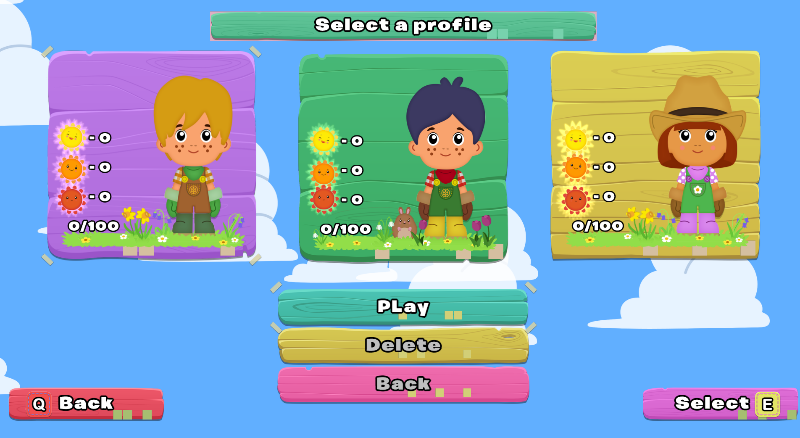
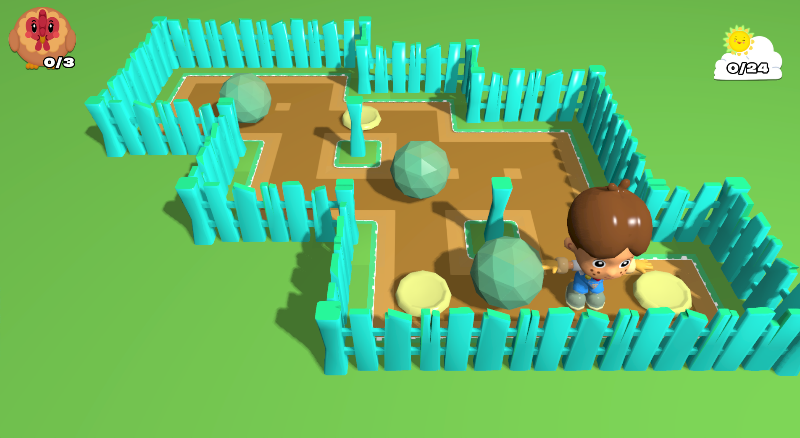
As the game was being worked up, the various character models were also being built at the same time. Based on the 2D concept art, the two SokoFarmers and the different animals were all modelled, textured, rigged and skinned ready for installation into the game. At this point, each model only had a simple ‘idle’ animation; more complex animations would be done once all of the models were in the game and moving about so that runs, pushes, etc. could be bent to what worked in the game. One interesting quirk which certainly made things look a little odd was that the SokoFarmers hair is a separate model from the main skin, this was to allow for the characters to have different hair styles and hats – nothing that unusual, but it did lead to some amusement when the boy and girl first went into the game as they were missing the tops of their heads, complete airheads in fact.
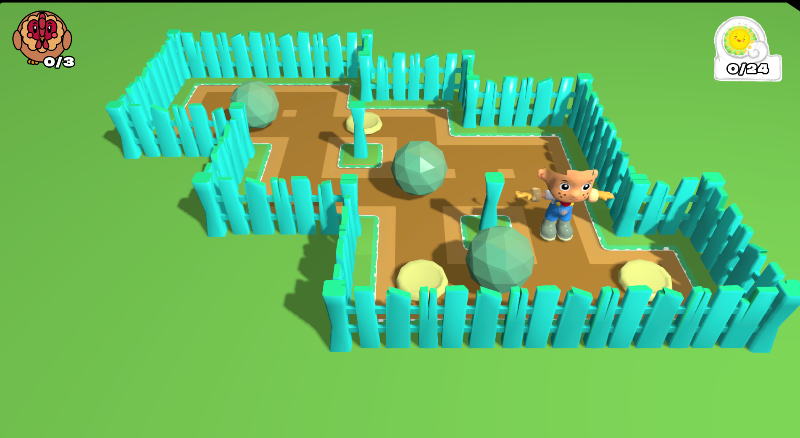
Aside from the top of their heads being missing, the characters were also still in their T-Pose as no animation frame was being applied yet. Characters are modelled in a T-Pose to allow for the loops around the shoulders to be created in a fashion that will bend, stretch and compress well without tearing while the skin is being transformed. This is one of the oldest techniques still used when creating 3D character models and is very effective. When we first put the SokoFarmers into the game, we also found that they’d been modelled 180 degrees in the wrong direction, so, they were facing the wrong way, again, quite funny to watch the characters slide around the environment backwards, in a T-Pose with the top of their heads missing, it's almost a shame to fix that stuff to get the characters rendering properly so we could start hooking some animations up.
After we’d dropped all of the character models in and hooked up some animations, the next job on the list was to sort out the character customization. The design called for the player to be able to change various elements of the characters appearance including the ability to play as a boy or girl character. Part of this had already been addressed when we attached the hair model to the character, but the rest of the options would need special code to work. First up and probably the simplest of the design elements was simply swapping between the boy and girl SokoFarmers. This was done as you probably would expect by just loading up a different player model, it took only a moment to hook that functionality up and link it to the character definition from the save packet. The result was genuinely impressive; being able to easily switch between the two models was a really nice feature, and one we hoped players would appreciate. The other aspect of the customization involved being able to change the skin tone, and clothing colours/designs. This was a little more complex, and was done by modifying the characters texture dynamically in a similar way to how the facial states would later be achieved. Again, when completed and working it felt really nice and something we were very happy with.
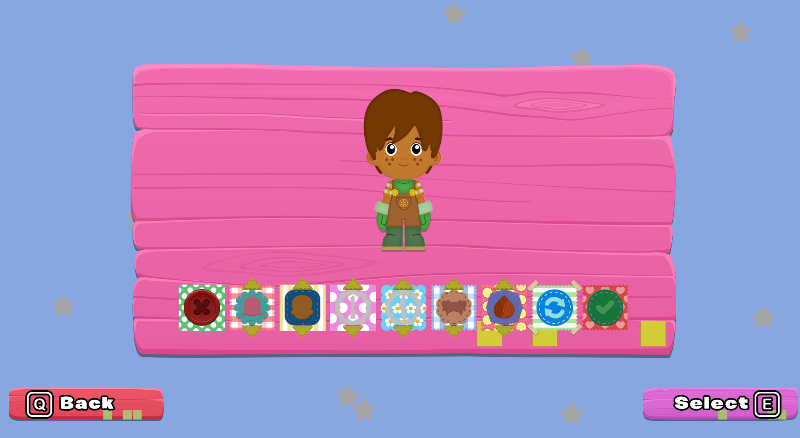
In showing the game around in its different stages of development, everyone took a moment to play with the look of the player character, even going back to modify the character two or three times during a short play of the game. While it wasn’t a quick thing to do, putting this functionality into the game was really worthwhile as it added to the overall feel of the game, making things a lot more friendly and warm.
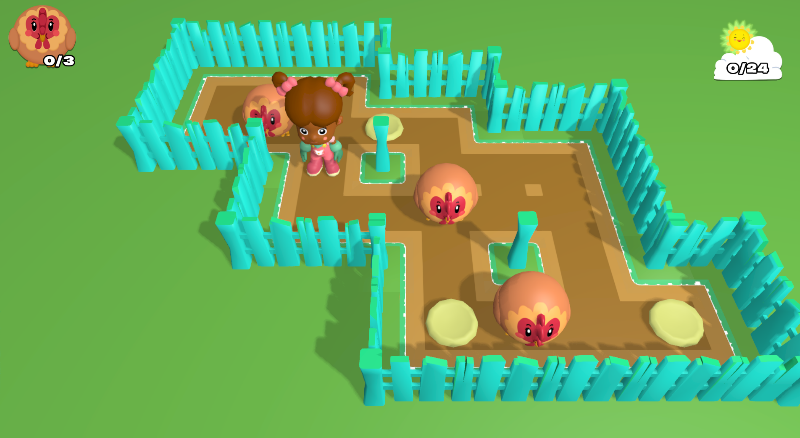
Something else done to help bed down the characters were the particle effects for footsteps, and rolling things around. Quite small, slight effects, but effective in giving the impression the characters were part of the scene, so while not massively apparent, important all the same. The birds also received ‘happy hearts’ when they were sat in an appropriate nest, again, not a large effect, but a clear way of signalling a correct action to the player – simple but clean. While it wasn’t a small chunk of work, all of the games characters had gone in, transforming the look and feel of the game and really helping to establish the overall tone of the game itself. Now it was time for everything else to catch up...