Bits and Pieces: Making SokoFarm.
Before we could get into the grind of building all of the games puzzles, there were still features and basic functionality of the core game left to finish and unfortunately some design decisions to make. Even though we had what was effectively a playable game loop - a player could properly play a puzzle, there still wasn’t a concept of an overall world, or progression through it as such. Linked to that was the puzzle map; while it had gone in very early, it wasn’t really hooked up to anything meaningful - all of the puzzle nodes simply started the same testbed. While this is fine for getting things working, it was time to flesh the map out and code the functionality needed to make puzzle selection work properly, linking puzzle status to the save packet.
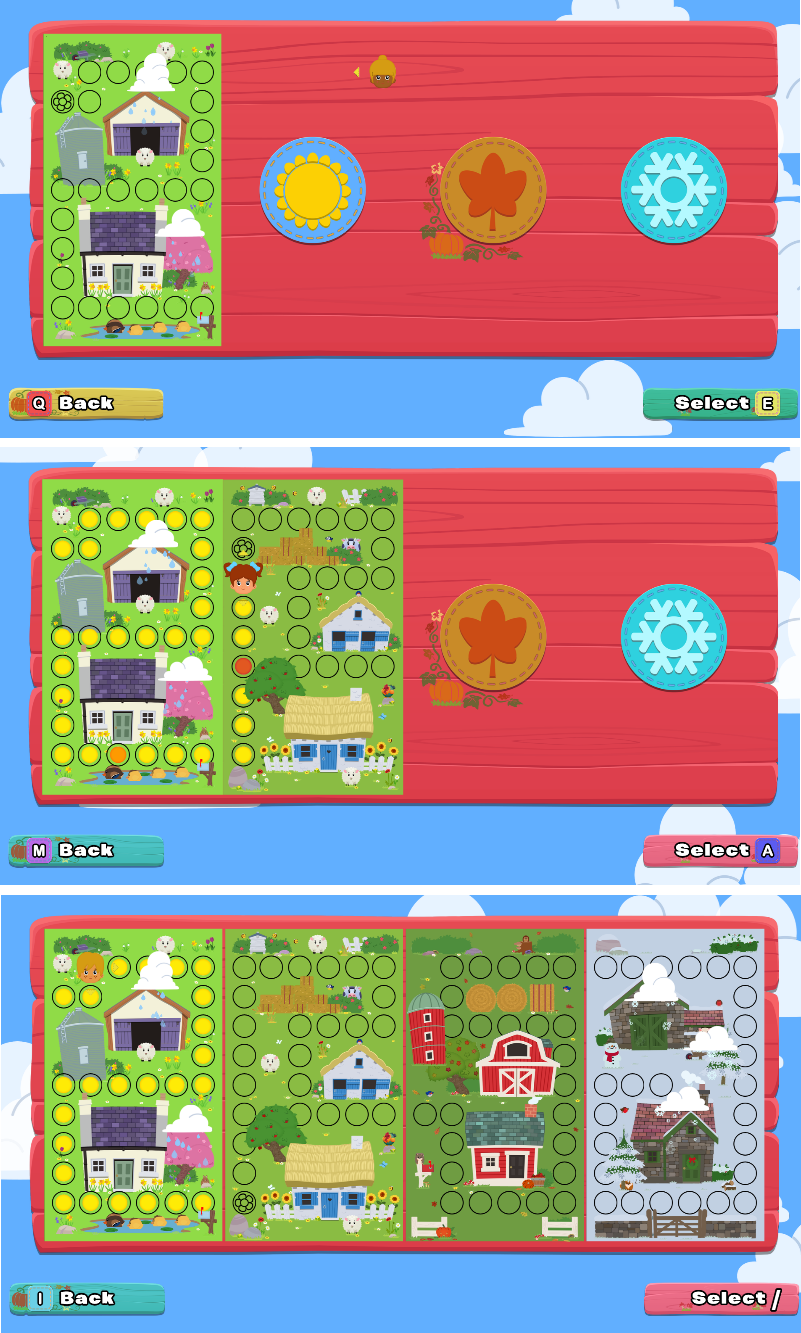
The game design had also progressed, now the games puzzles were split into the four seasons, spring through summer to autumn and finally winter, this would have to be reflected in the puzzles background tile-set and map-screen ‘slice’ which now also appeared on a per season basis as the player worked through the game. Getting these things working lead directly to the other fundamental missing piece of the design – the Rooster dialogues. At set points in the game, the player would be fed instructional information via a dialogue prompt, where a friendly Rooster would impart its wisdom on the player.
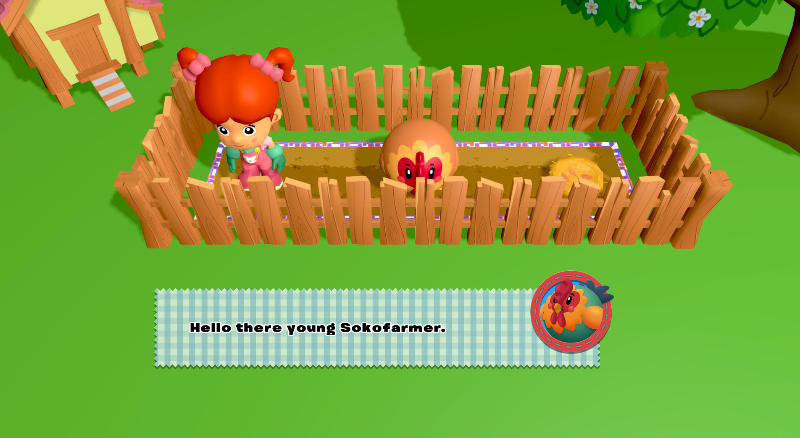
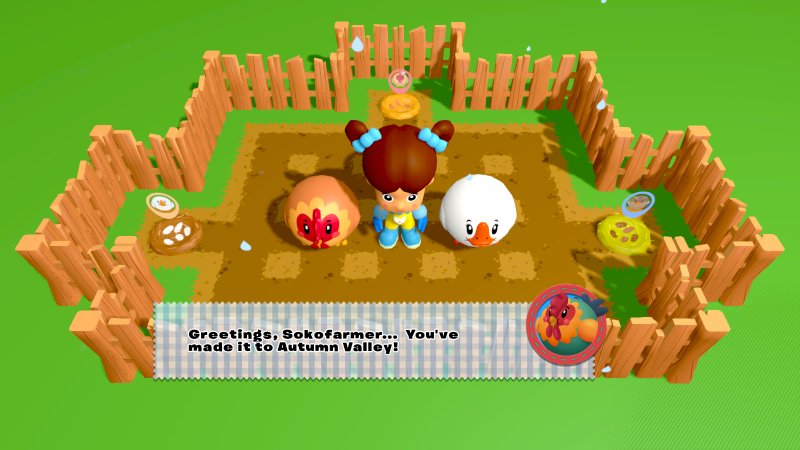
The appearances of the Rooster would mostly be clumped around the games early puzzles where the basic controls and rules of the game are given to the player, but the Rooster would also end up appearing at the start of the different seasons to introduce the new object types, and at couple of set points later in the game where additional gameplay features were introduced. As the game grew in complexity, so did the Roosters footprint, so much so, he almost ended up being the games icon!
With the Rooster in and doing his thing, the next item on the list was something that had become a problem as development progressed and a decision was needed with part of the games original concept. As well as having different types of bird needing to be rolled to unique nest types, the game at this time also featured other animals that interacted with the player in different ways to form obstacles. Sometimes when you’re laying out a game concept, some ideas look great on paper, but don’t work as you imagined in practice. The animal obstacles were a lovely idea, but basically broke the game and needed to be taken out. It was a great shame, as they were lovely designs but as soon as they moved of their own accord, the player lost control of what was happening, a big no-no for a puzzle game of this type. While the animals as obstacles didn’t work, the idea of obstacles in general did, so, after a little playing with the basic idea, the animals ended up being replaced with logs which could only be rolled along a single axis, these logs would only appear during the games final season and proved to be an interesting and fun way of increasing the games difficulty.