The Grind: Making SokoFarm
While we’d not really been making SokoFarm for that long at this point, only a matter of months in fact, we had what could be considered a mechanically complete game, all the toys were in and working, had been tested and were felt to be pretty stable and bug free. We were now at the point where most developments slump – building up the games content – which in the case of SokoFarm meant building, testing and refining all of the games puzzles.
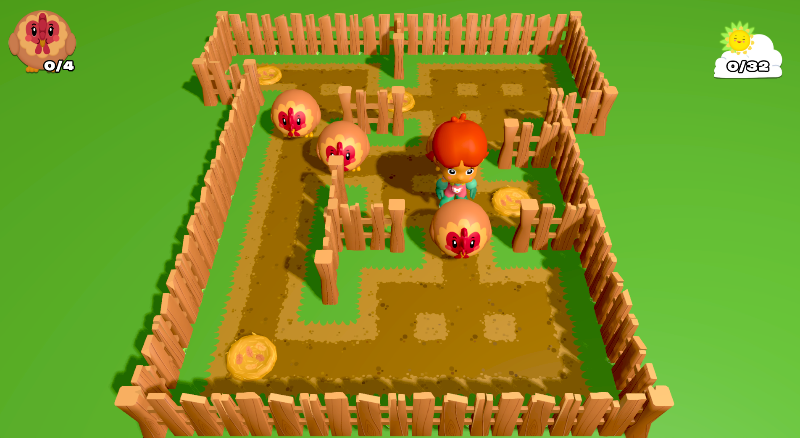
While much has been written about the subject, there’s no easy or quick way of crafting puzzle designs for a game of this type, it’s a slow, often painful process that usually results in a lot of wasted work as your understanding of what plays well evolves and earlier designs end up getting discarded for better ideas. There are few short cuts, and it’s usually something you just have to work through as best you can. It’s often one of the main reasons projects slump in the middle as developers just have to grind through the creation process. SokoFarm was complicated by the fact that we were doing something different in the genre as we had new mechanics being brought in as the seasons progressed, so the puzzle designs themselves became more complex, slower to design and slower to test and tune. A long process and something that ended up eating most of the overall development time for the game.
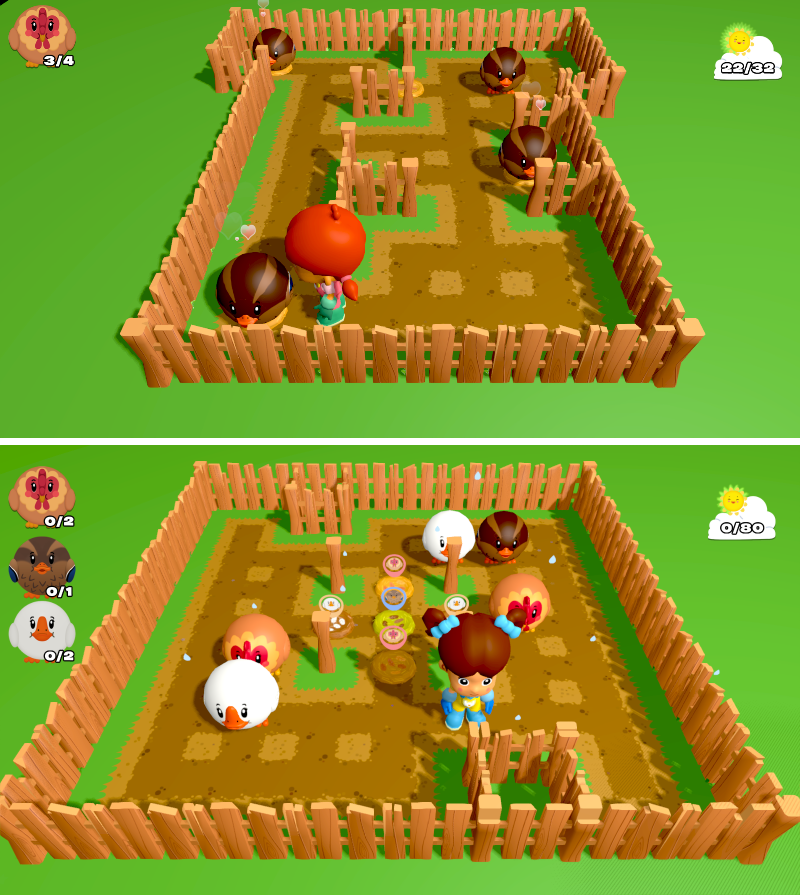
While all of the games puzzles originally were blocked out with the spring tileset, work was being done on the games other seasons, and we were shaping the games overall look and feel, both for the 2D and 3D aspects of the game.
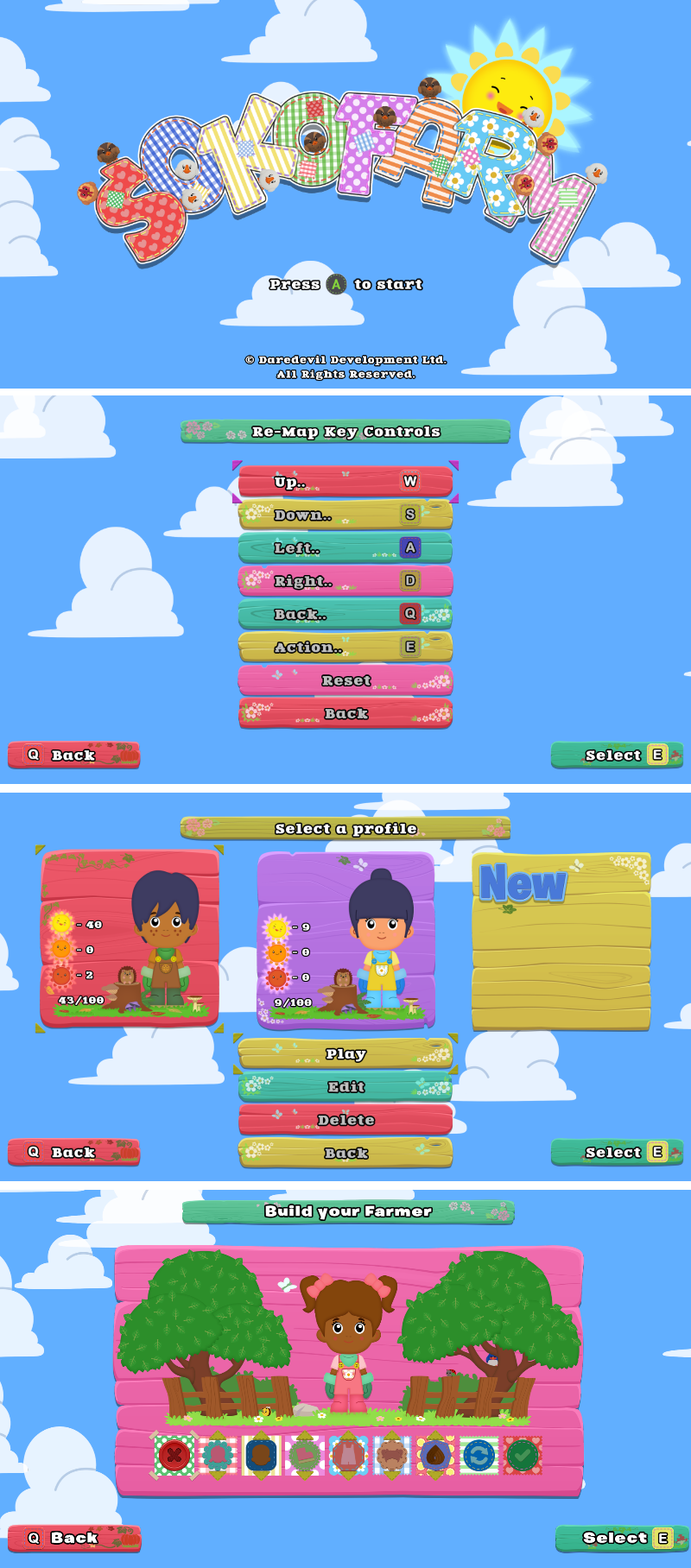
Something everyone liked about the games original concept art was the flat cut out style of some of the images. This look ended up being used for all of the games many interfaces, and even though we were making a 3D game, the flat cut out style crept into some of the 3D assets – notably the grass and flowers, helping to tie the different parts of the game together.
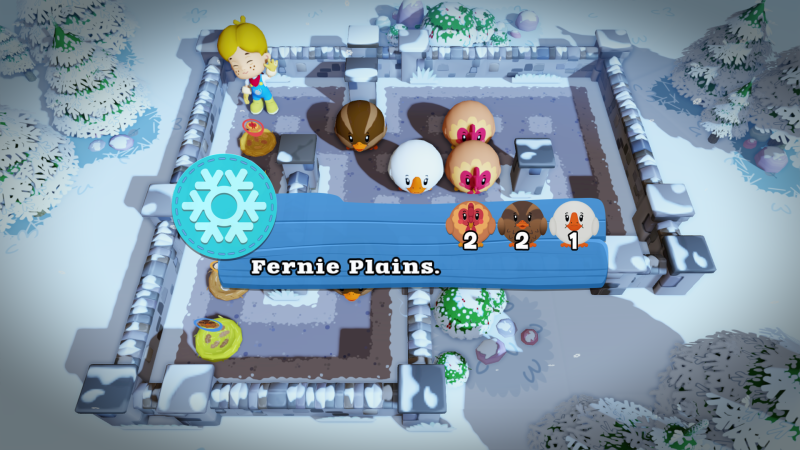
Along with the graphical assets, the shading and lighting style of the game was something of a moving target during development as we played with different effects and rendering styles, looking for something that gave the look we originally wanted – a soft, matt almost putty looking finish to the lit surfaces. We would go through a number of different lighting and shading styles before finally settling on the games finished look quite late in development.
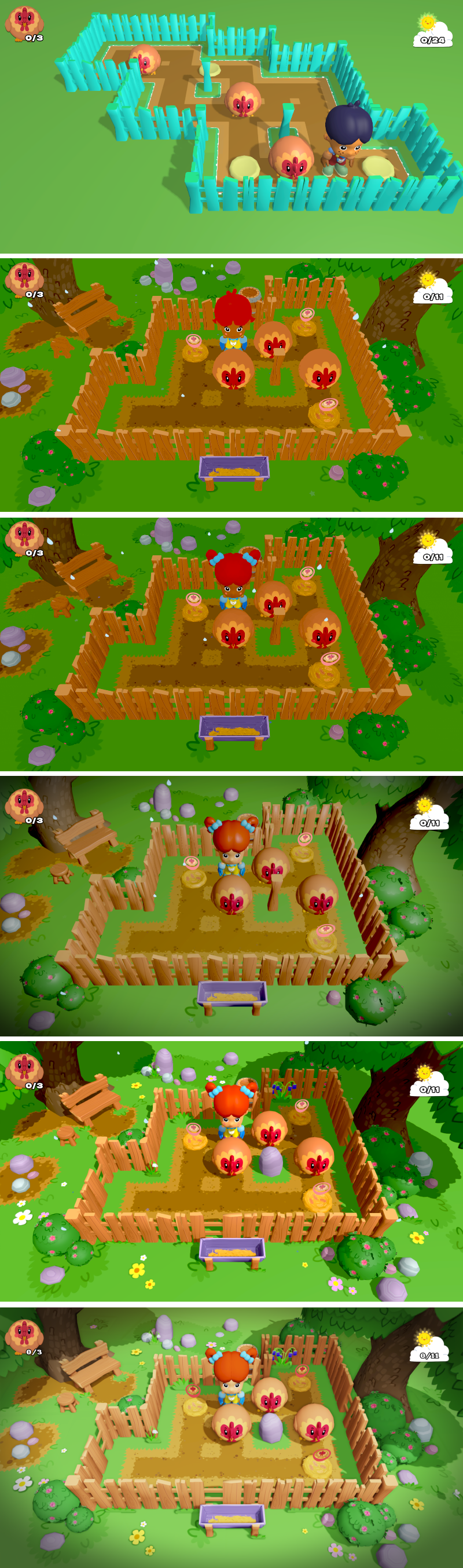
Although the games puzzles were being designed and locked, they were still bare and devoid of any decoration. Once we were mostly through the puzzle design process, the majority of the games tiles were being finished, so the process of decorating the puzsle could begin, while the fences were automatically set up, the surrounding area is still a hand-crafted piece of work and had to be done for each and every puzzle, with all of the games puzzles having a unique and different feel to one another to add to the games overall character.
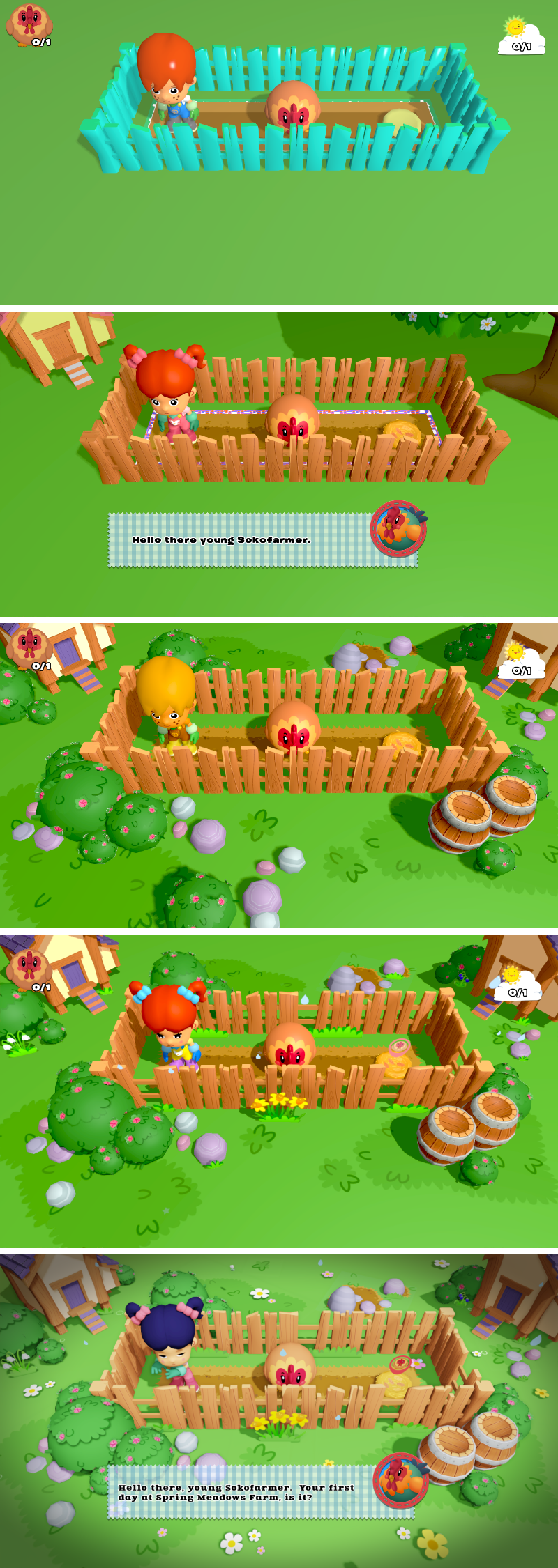
Not a quick or particularly easy task, but one which completely transformed the game and moved us a lot closer to having something that was starting to feel finished.